
When recommending growing microgreens to novices, it’s important to concentrate on microgreens that are well-known for their quick development, high germination rates, and ability to withstand slight variations in growing circumstances. Because of their good yields and relative simplicity of cultivation, radish, broccoli, and sunflower microgreens are frequently suggested as great beginning places for novices.
It all starts with good quality seeds.
Growers know that bad seeds no matter how perfect the growing conditions compete poorly when compared to good quality seeds. In fact good quality seeds can grow well in less than perfect conditions.
Which to grow?
Here is a comparison of various microgreens cultivars for yield and ease of cultivation, with a focus on beginners:
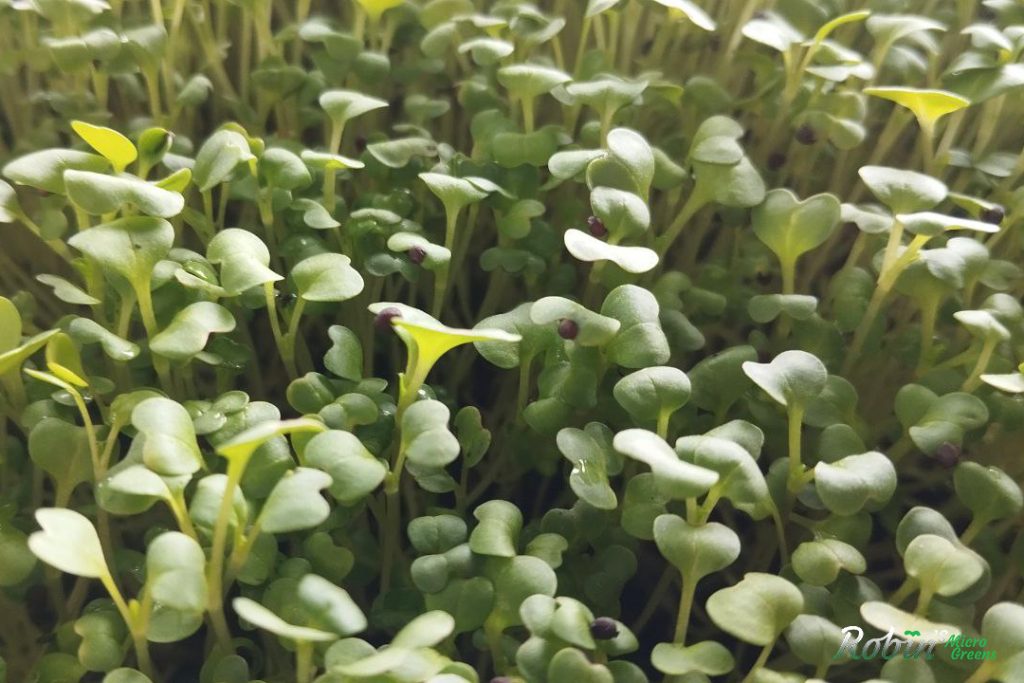
Cabbage
Growth Ease: Simple. Like broccoli, cabbage microgreens are easy to grow and have high germination rates.
Yield: Good
Harvest Time: 7–10 days.
Flavor Profile: Earthy, mild, and somewhat sweet
Advice for Novices: Soaking is not necessary. More Difficult Microgreens (Avoid for Novices)
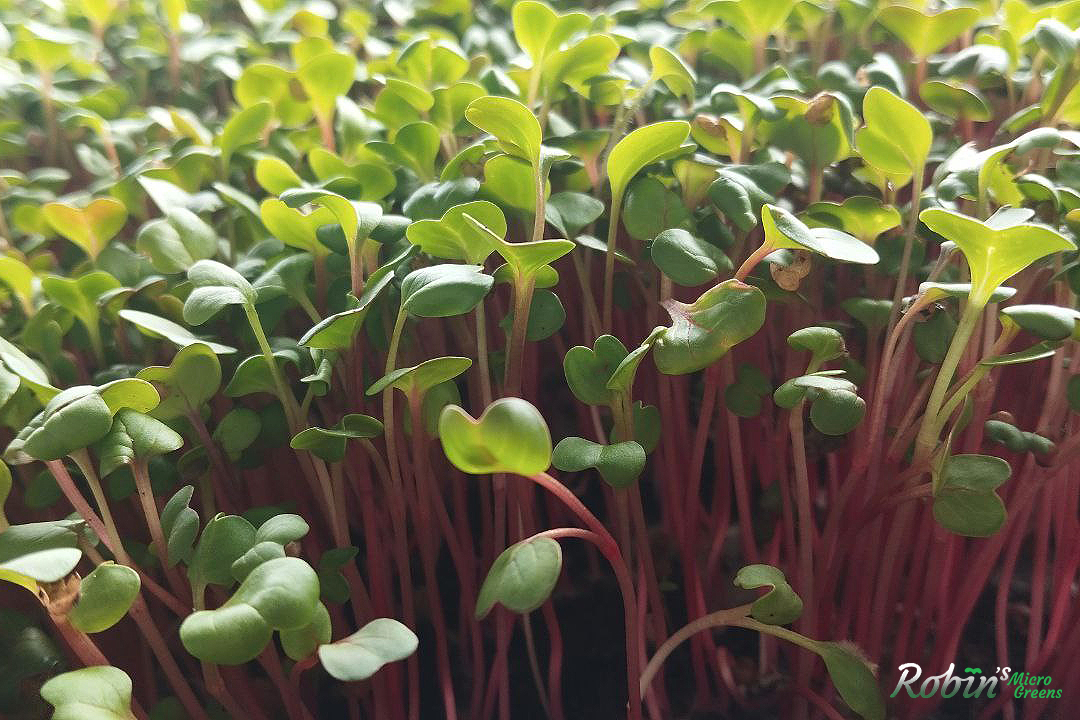
Radish
Growth Ease: Quite simple. Radish seeds grow swiftly after germinating, usually in 1-2 days. They don’t need complex light setups and are tolerant of a little over or under-watering.
Yield: Good. They quickly generate a respectable amount of greens.
Harvest Time: After seeding, it usually takes five to seven days.
Flavour Profile: Mildly peppery and slightly spicy, like to ripe radishes.
Advice for Novices: Soaking is not necessary. During blackout, uniformly distribute the seeds and cover them with a thin layer of growing medium or another tray.
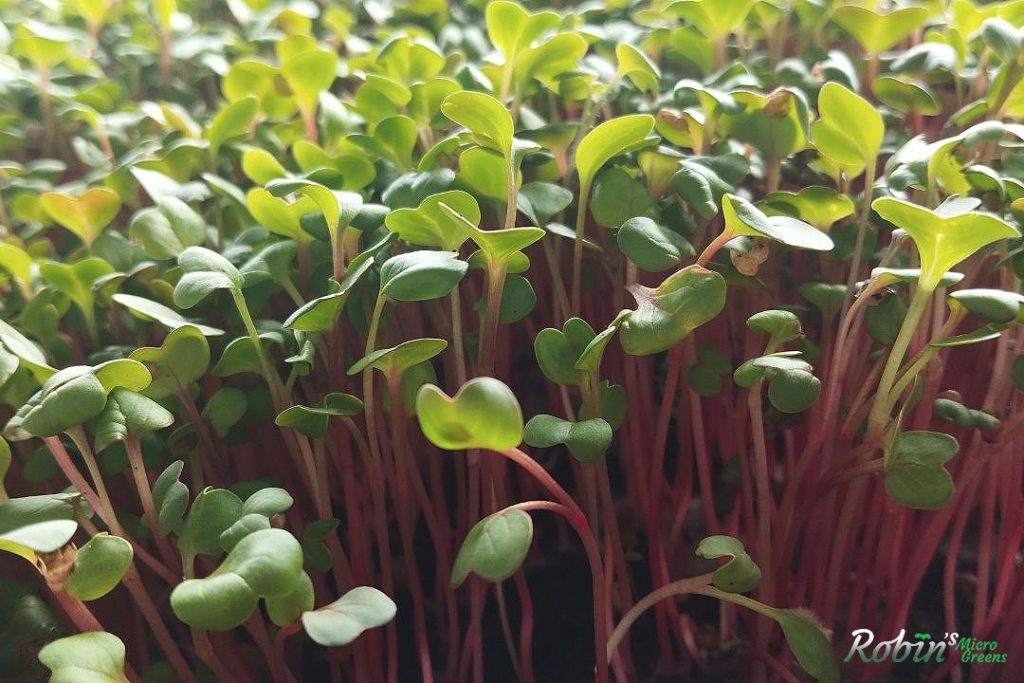
Broccoli
Growth Ease: Simple. Broccoli seeds develop steadily and have a good germination rate. Compared to some other types, they are less likely to develop mould.
Yield. Good. They create a thick layer of greens.
Harvest Time: Around seven days in summer, and 10 in winter.
Flavour Profile: Fresh, mild, and faintly cabbage-like.
Advice for Novices: No need to soak. To avoid damping off, make sure there is adequate air movement.
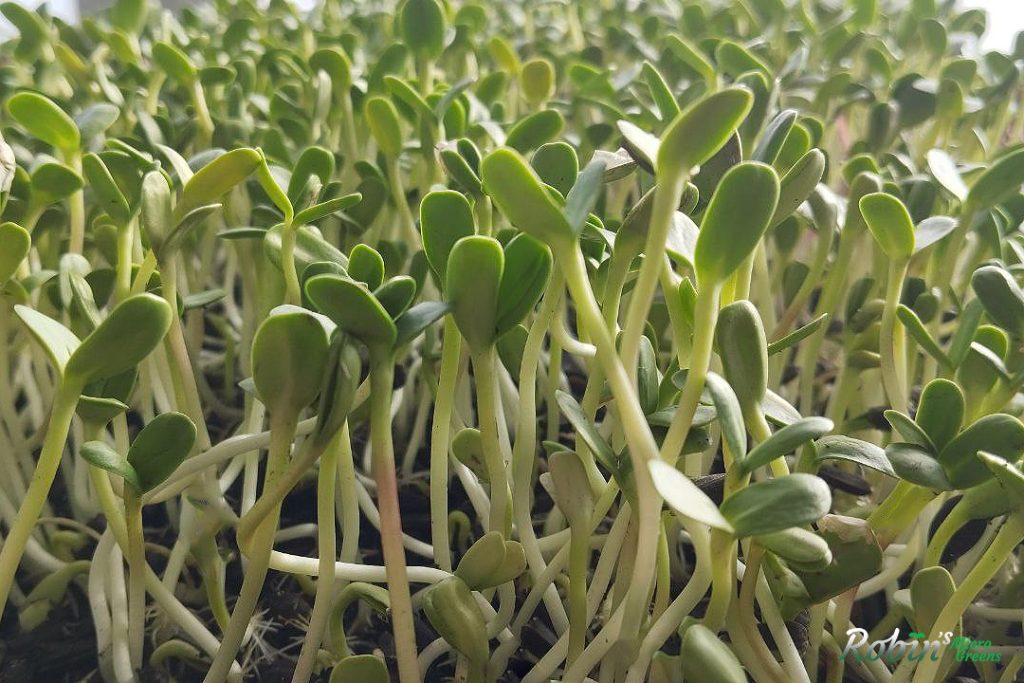
Sunflower
Growth Ease: Simple to Moderate. Sunflower seeds germinate consistently and develop into vigorous, tasty microgreens, but they do require soaking. Compared to broccoli or radish, they are a little bigger and take up a little more room.
Yield: Excellent. For novices, sunflowers are quite satisfying due to their large output.
Harvest Time: 7–12 days on average.
Flavour Profile: Nutty, crunchy, and slightly sweet.
Advice for Novices: To enhance germination, soak seeds for four to eight hours prior to planting. To promote robust root development and consistent growth, cover with a weight during the blackout period.
Pea shoots
Growth Ease: Simple. Pea seeds are big and manageable. They grow fast and germinate well.
Yield: Substantial number of greens.
Harvest Time: 8–14 days.
Flavor Profile: Clearly pea-like, sweet, and fresh.
Advice for Novices: Before planting, soak the seeds for eight to twelve hours. A somewhat deeper growing medium is beneficial to them.
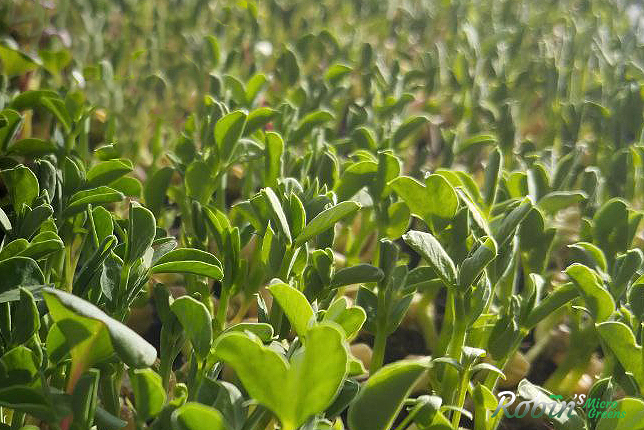
Some more difficult microgreens to grow
Basil microgreens: prone to damping-off, slower development, and decreased germination rates. Cilantro Microgreens: They grow very slowly, need extended blackout times, and can be picky. Beet Microgreens: They grow more slowly, are susceptible to mold, and need more irrigation.
Amaranth Microgreens: These tiny, delicate seeds might be difficult to grow into a dense, even stand.
Crucial Elements of Success for Novices Seed Quality: Always begin with premium, untreated microgreen seeds from a reliable vendor.
Growing Medium: It is essential to have a high-quality, finely textured growing medium (such as coco coir or a seed-starting mix). Watering: It is important to water consistently and gently. Steer clear of over-watering as this can result in mold growth. Often, bottom watering is advised. Light: After germination, supplying enough light (natural sunshine or a basic LED grow light) is crucial for optimal growth and colour, even if some microgreens can begin in indirect light.
Thanks for reading folks.